- Published on
How To Build An Ai Agent
- AUTHOR
 Maya AlvarezContent Specialist
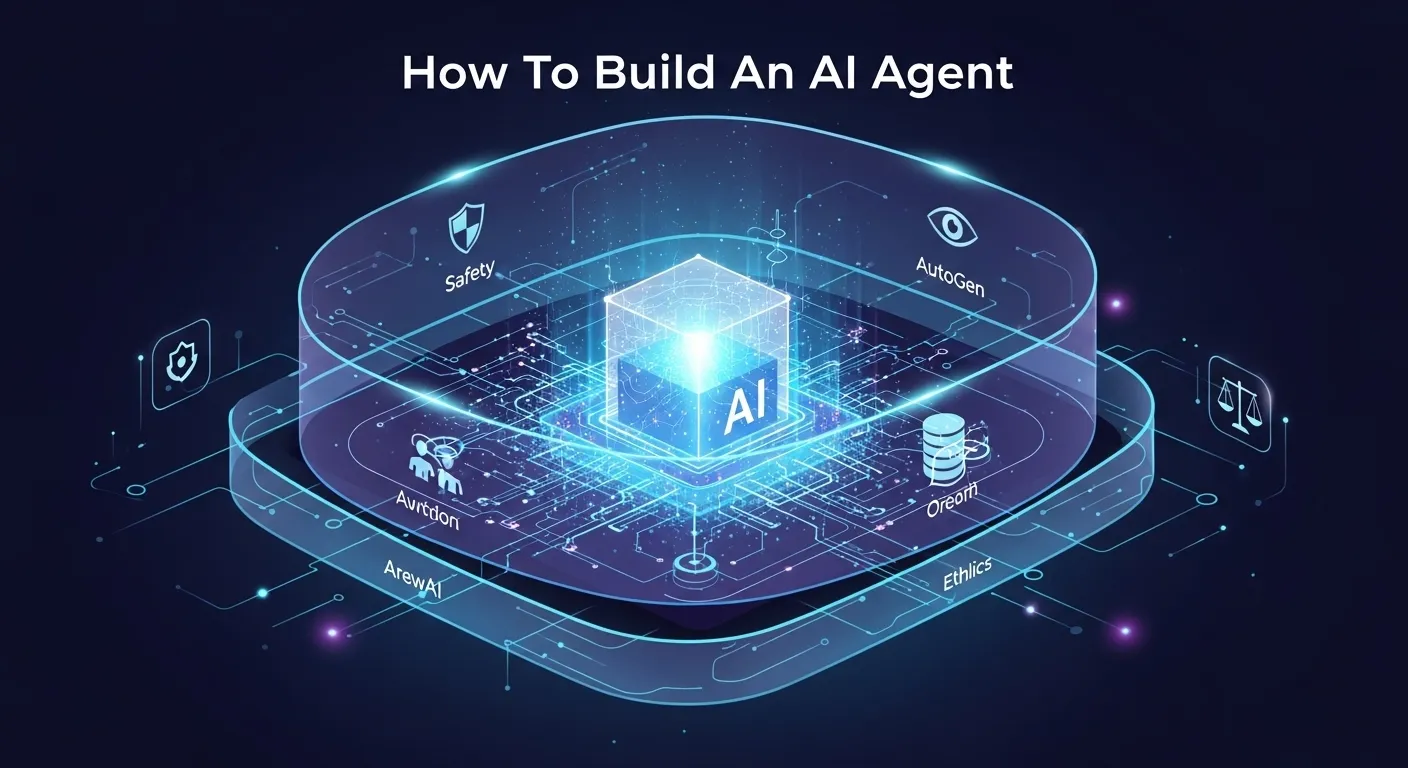
Developing effective AI agents is a complex endeavor. The process of how to build an AI agent that is powerful and trustworthy requires selecting the right framework and implementing rigorous safety protocols. This guide compares leading open-source tools and outlines essential strategies for creating production-ready, mission-critical autonomous systems that perform reliably and ethically.
Choosing the Right Framework
The architectural foundation is critical, as different frameworks are optimized for specific application domains.
- CrewAI: Excels in role-based team workflows, making it ideal for customer service applications mimicking human teams. Its simplified setup, task-focused architecture, and built-in RAG support streamline deployment for projects requiring structured collaboration and real-time data integration.
- AutoGen: Microsoft’s framework is optimized for enterprise data analysis and DevOps automation via event-driven, multi-agent orchestration. It shines in code execution, supporting automated API development and code refactoring, making its AgentChat system perfect for complex analytical workflows.
- LangGraph: Part of the LangChain ecosystem, this provides a flexible graph-based engine for applications needing rigorous control. Its customizable memory, human-in-the-loop approvals, and production-grade reliability make it preferred for regulated industries like finance and healthcare.
Many implementations strategically combine frameworks, using LangGraph for workflow structure while leveraging specialized agents from CrewAI or AutoGen.
Level up your workflow
Powerful tools to accelerate your content
Strategies for Reliable and Ethical Agents
Beyond the framework, knowing how to build an AI agent securely involves embedding robust safety measures from day one. These evidence-based strategies are essential for mitigating hallucinations and ensuring governed, ethical decision-making in mission-critical applications. Implement a multi-layered defense incorporating the following:
- Grounding with RAG: Use Retrieval-Augmented Generation with trusted data sources like PubMed or WHO databases, cross-referencing multiple reliable references to ground responses in factual information.
- Governed Autonomy: Implement embedded policies and mandatory human escalation paths for irreversible actions, requiring explicit approval for key decisions (e.g., "I will create X with Y fields — proceed?").
- Robust Long-Term Memory: Build persistent memory using serverless databases like Neon Postgres to store and retrieve verified information, enabling agents to learn from past human-validated outcomes.
- Version-Controlled Guardrails: Establish strict rules for acceptable behavior, mandatory evaluation gateways before deployment, and continuous bias audits through diverse dataset testing. The key to understanding how to build an AI agent for enterprise use is this rigorous governance.
- Radical Transparency: Prioritize clarity by showing reasoning snippets and tool actions. Optimize model usage by right-sizing selections, using smaller models for simpler tasks like classification.
- Iterative Feedback Loops: Create systems where human escalations and performance metrics directly update both agent memory and system design in continuous development cycles.
Ultimately, success depends on a dual focus: strategically choosing a framework that fits the application's domain and embedding robust ethical and safety guardrails from the outset. This holistic approach is fundamental to mastering how to build an AI agent.
Subscribe to our newsletter
Get notified when we publish new content. No spam, unsubscribe at any time.